
CompTIA FC0-U61日本語 : CompTIA IT Fundamentals+ Certification Exam (FC0-U61日本語版)

- Exam Code: FC0-U61日本語
- Exam Name: CompTIA IT Fundamentals+ Certification Exam (FC0-U61日本語版)
- Updated: Sep 01, 2026 Q&As: 360 Questions and Answers
About CompTIA FC0-U61日本語 Exam
High Pass Rate for Success
Our FC0-U61日本語 dumps torrent questions have a number of advantages. Above everything else, the passing rate is the issue candidates pay most attention to. And high passing rate is also the most outstanding advantages of FC0-U61日本語 valid dumps questions. Through continuous research and development, our products have won high reputation among our clients. We guarantee a ninety-nine percent passing rate, which means you can pass exam as long as you review with our FC0-U61日本語 latest dumps questions. It's easy to pass exam with 20 to 30 hours on learning our FC0-U61日本語 dumps torrent questions. Our FC0-U61日本語 valid dumps questions are ensured by our hardworking experts, who update it to ensure the quality. We aim to help more candidates to pass the exam and get their ideal job.
Nowadays, more compliments are raised that it is much more difficult to find a good job (FC0-U61日本語 latest dumps). More requirements are raised by employees. They create a lot of requirements to screen talents for their own company, which makes candidates very worried for their career and future. So how can you stand out from the furious competition (FC0-U61日本語 dumps torrent)? Some people choose to further their education to get a higher degree, while some people try to give themselves an added advantage by obtaining a professional CompTIA certificate. All we all know, passing exam would be helpful to your career in the modern era, therefore choosing high-quality FC0-U61日本語 valid dumps is just as choosing a edge tool for you. Our FC0-U61日本語 latest dumps serve as a leader product in our industry, can help candidates pass exam quickly.

Pass Exam in fastest Two Days
Our FC0-U61日本語 latest dumps questions are closely linked to the content of the real examination, so after 20 to 30 hours' study, candidates can accomplish the questions expertly, and get through your CompTIA FC0-U61日本語 smoothly. You can email us or contact our customer service online if you have any questions in the process of purchasing or using our FC0-U61日本語 dumps torrent questions, and you will receive our reply quickly.
Instant Download FC0-U61日本語 Exam Braindumps: Upon successful payment, Our systems will automatically send the product you have purchased to your mailbox by email. (If not received within 12 hours, please contact us. Note: don't forget to check your spam.)
What are the prerequisites for CompTIA FC0-U61 exam?
CompTIA FC0-U61 is associated with the fundamental-level certificate, which means that it does not have any prerequisites to fulfill. It is aimed at the candidates who are looking to take up a career in the field of IT. The advanced end users can also consider sitting for this exam. The target audience for this test is the professionals working in the IT-related fields, sales, and operations, as well as the marketing specialists working in the IT-based companies. The exam is also a good foundation for those individuals who are looking to pursue the certifications of more advanced levels such as CompTIA A+ or higher.
Three Versions of FC0-U61日本語 latest dumps questions
Different candidates have different requirements, thus we design our FC0-U61日本語 dumps torrent questions into three different versions, and each of them has its own specialty. Firstly, PDF Version of FC0-U61日本語 valid dumps questions is convenience for you to read, print and take notes. Besides, printed material would be suitable for some candidates who are not convenient to use electronic products. Secondly, SOFT Version of FC0-U61日本語 latest dumps questions is created into a questions and answers mode, which simulates the FC0-U61日本語 real test environment, which is conducive for you to adapt the exam with ease. This version can only run on Windows operating system, no restriction of the installed computer number. The last one is the APP Version of FC0-U61日本語 dumps torrent questions, which supports any kind of electronic equipments. You can use it to study whenever and wherever possible once you download it under interconnection state at first. Please purchase one kind of FC0-U61日本語 valid dumps questions according to your own circumstance and it would be your most capable learning tool.
CompTIA FC0-U61: Career Prospects and Available Earnings
The CompTIA ITF+ certification is the industry standard that introduces the professionals to the basic IT knowledge and skills. The certificate provides the learners with an IT education framework to prepare them for launching a career in the industry. It is the only pre-career certification that enables the students or career changers to check if they have sufficient competency for the IT sphere and if it is the appropriate career path for them. Some of the job roles that the holders of CompTIA IT Fundamentals can apply for include:
- Junior IT Support Analyst
- Junior Systems Engineer
- Junior Business Analyst
- Junior Network Engineer
- Junior Software Developer
- IT Support Technician
Even if you have no prior experience in the IT sector, with the CompTIA ITF+ certification, you can count on a decent salary. According to PayScale.com, an IT Support Technician can earn an average annual salary of $45,789, while a Junior Business Analyst can make an average of $50,820 per year.
Certification Path
There is no prerequisite for this exam.
CompTIA FC0-U61 Exam Syllabus Topics:
| Topic | Details |
|---|---|
IT Concepts and Terminology - 17% | |
| Compare and contrast notational systems. | 1.Binary 2.Hexadecimal 3.Decimal 4.Data representation
|
| Compare and contrast fundamental data types and their characteristics. | 1.Char 2.Strings 3.Numbers
4.Boolean |
| Illustrate the basics of computing and processing. | 1.Input 2.Processing 3.Output 4.Storage |
| Explain the value of data and information. | 1.Data and information as assets 2.Importance of investing in security 3.Relationship of data to creating information 4.Intellectual property
5.Digital products
|
| Compare and contrast common units of measure. | 1.Storage unit
2.Throughput unit
3.Processing speed
|
| Explain the troubleshooting methodology. | 1.Identify the problem
2.Establish a theory of probable cause
3.Test the theory to determine the cause
4.Establish a plan of action to resolve the problem and identify potential effects |
Infrastructure - 22% | |
| Classify common types of input/output device interfaces. | 1.Networking
2.Peripheral device
3.Graphic device
|
| Given a scenario, set up and install common peripheral devices to a laptop/PC. | 1.Devices
2.Installation types
|
| Explain the purpose of common internal computing components. | 1.Motherboard/system board 2.Firmware/BIOS 3.RAM 4.CPU
5.Storage
6.GPU
|
| Compare and contrast common Internet service types. | 1.Fiber optic 2.Cable 3.DSL 4.Wireless
|
| Compare and contrast storage types. | 1.Volatile vs. non-volatile 2.Local storage types
3.Local network storage types
4.Cloud storage service |
| Compare and contrast common computing devices and their purposes. | 1.Mobile phones 2.Tablets 3.Laptops 4.Workstations 5.Servers 6.Gaming consoles 7.IoT
|
| Explain basic networking concepts. | 1.Basics of network communication
2.Device addresses
3.Basic protocols
4.Devices
|
| Given a scenario, install, configure and secure a basic wireless network. | 1.802.11a/b/g/n/ac
2.Best practices
|
Applications and Software - 18% | |
| Explain the purpose of operating systems. | 1. Interface between applications and hardware 2.Disk management 3.Process management/scheduling
4.Application management
|
| Compare and contrast components of an operating system. | 1.File systems and features
2.Features
3.File management
4.Services
8.Interfaces
|
| Explain the purpose and proper use of software. | 1.Productivity software
2.Collaboration software
3.Business software
|
| Explain methods of application architecture and delivery models. | 1.Application delivery methods
2.Application architecture models
|
| Given a scenario, configure and use web browsers. | 1.Caching/clearing cache 2.Deactivate client-side scripting 3.Browser add-ons/extensions
4.Private browsing
7.Popup blockers |
| Compare and contrast general application concepts and uses. | 1.Single-platform software 2.Cross-platform software
3.Licensing
4.Software installation best practices
|
Software Development Concepts - 12% | |
| Compare and contrast programming language categories. | 1.Interpreted
2.Compiled programming languages |
| Given a scenario, use programming organizational techniques and interpret logic. | 1.Organizational techniques
2.Logic components
|
| Explain the purpose and use of programming concepts. | 1.Identifiers
2.Containers
3.Functions
|
Database Fundamentals - 11% | |
| Explain database concepts and the purpose of a database. | 1.Usage of database
2.Flat file vs. database
3.Records
|
| Compare and contrast various database structures. | 1.Structured vs. semi-structured vs. non-structured 2.Relational databases
3.Non-relational databases
|
| Summarize methods used to interface with databases. | 1.Relational methods
2.Database access methods
3.Export/import
|
Security - 20% | |
| Summarize confidentiality, integrity and availability concerns. | 1.Confidentiality concerns
2.Integrity concerns
3.Availability concerns
|
| Explain methods to secure devices and best practices. | 1.Securing devices (mobile/workstation)
2.Device use best practices
|
| Summarize behavioral security concepts. | 1.Expectations of privacy when using:
2.Written policies and procedures
|
| Compare and contrast authentication, authorization, accounting and non-repudiation concepts. | 1.Authentication
2.Authorization
3.Accounting
4.Non-repudiation
|
| Explain password best practices. | 1.Password length 2.Password complexity 3.Password history 4.Password expiration 5.Password reuse across sites 6.Password managers 7.Password reset process |
| Explain common uses of encryption. | 1.Plain text vs. cipher text 2.Data at rest
3.Data in transit
|
| Explain business continuity concepts. | 1.Fault tolerance
2. Disaster recovery
|
Reference: https://certification.comptia.org/certifications/it-fundamentals
Related Exam
Related Certifications
Over 59730+ Satisfied Customers
What Clients Say About Us
Quality and Value
DumpsTests Practice Exams are written to the highest standards of technical accuracy, using only certified subject matter experts and published authors for development - no all study materials.
Tested and Approved
We are committed to the process of vendor and third party approvals. We believe professionals and executives alike deserve the confidence of quality coverage these authorizations provide.
Easy to Pass
If you prepare for the exams using our DumpsTests testing engine, It is easy to succeed for all certifications in the first attempt. You don't have to deal with all dumps or any free torrent / rapidshare all stuff.
Try Before Buy
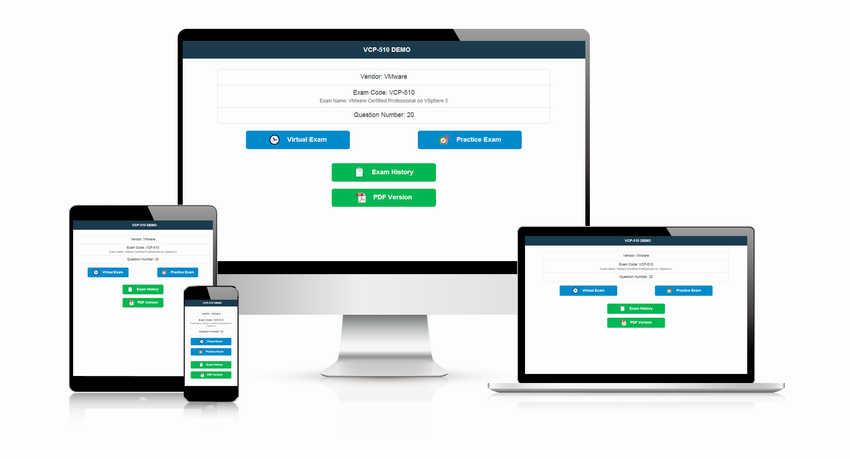
DumpsTests offers free demo of each product. You can check out the interface, question quality and usability of our practice exams before you decide to buy.


Use our training practice dumps with real exam questions & answers. Freely download the valid test study torrent, and start your preparation with no time wasted. 100% pass guaranteed is our promise. No help, full refund.